Packing List: What to Wear for Gorilla Trekking
Whether you are visiting Bwindi Forest or Mgahinga Gorilla Park, there are some items that will be useful to carry for the trek. For either a Long or Short Gorilla trekking safari, the list below is helpful to help with what to wear for Gorilla trekking in Uganda;
The right clothing to carry for Gorilla trekking
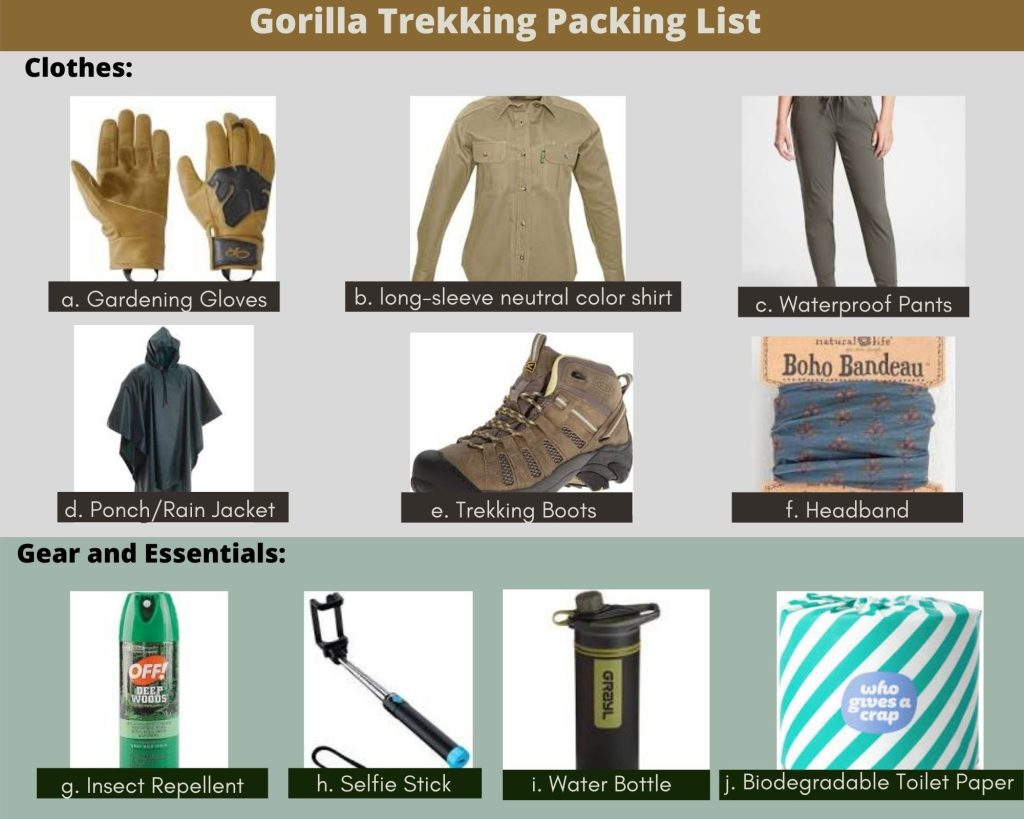
Gorilla trekking involves walking in dense forests and therefore your body must be well protected. Wear long safari-style trousers, long safari-style shirts, a rain jacket, hat or hair bandana, extra thick stockings, and hand gloves.
Long Safari trousers: Vegetation in the Gorilla Parks is thick and comprised of many kinds of plants that could cause scratches on your body. Wear long trousers when trekking Gorillas to ensure that your body is not affected by bruises or rashes from plants like nettles.
As you choose the best trouser for the trek ensure that they are easy to tuck into your stocks, not very tight and give you the freedom to trek up and down the mountains. You do not need a trouser with many pockets since you will have a backpack with your essentials or hire a porter to carry your luggage for you if need be. Waterproof trousers are a perfect choice especially if it rains during the trek, these will keep your body dry and warm.
Choose to pack detachable trousers. These will be so helpful since you can wear them as shorts during other times of your safari, especially on a Long Uganda Safari. You can wear shorts in the evenings.
Long Safari t-shirts or shirts : Your hands will need perfect protection too. Though you may sweat during the hike, it also gets cold in the higher altitudes and long sleeve shirts are perfect.
Cotton shirts or those with a merino wool layer are the best shirts to wear. They shouldn’t be so heavy to suffocate you in case it is warm. A light one would be preferable since you will have to carry a light jacket too.
Shirts with long sleeves will protect you from bites and scratches from nettles while in the forest. The size of the shirt is dependent on your interest. If you are wearing a jacket, then the shirt can be of any color.
Rain Jacket: Carry a light rain jacket or waterproof jacket since it’s very essential. Since the gorilla habitats in Uganda are lush and well-vegetated, they receive a lot of rain and it could rain at any time of the day.
Even when it’s not the rainy season, it is cold in the morning as you go to the jungle. You wouldn’t love to experience the coldness when it starts raining during the trek. Choose a waterproof jacket that is light. However, it should not be the incredibly lightweight jacket or paper thin that will end up getting pierced by any plants.
Purchase a reasonable size of the jacket to keep you warm and also keep protected. The jacket should also be breathable to ensure it doesn’t trap heat inside as you walk through the forest.
Ensure your jacket has a hoodie, this will help keep your head dry in case it rains. It shouldn’t be water resistant but waterproof, water-resistant jackets can seep through water if the rains take so long.
hat or hair bandana: If you have long hair, you would want to hold it and keep it safe from any crawling insects. A hat would highly be helpful especially when it rains. However, if you are wearing a jacket with a hoodie, then a hair bandana would be helpful just to hold the hair.
Extra thick stockings: For Gorilla trekking in Uganda, Bwindi Impenetrable National Park is very dense and can have all sorts of crawling insects that will want to crawl on your legs. Insects like the red fire ants are tiny and can cause harm to your legs.
Therefore, ensure to have a pair of thick tall stockings when you can tuck in your trousers. It is therefore an essential item to have when planning what to wear for gorilla trekking in Uganda.
Hand Gloves: For the protection of your palms, consider wearing hand gloves. As you hike the trails could be slippery and you may need to have a grip on any plant. However, you may not know what you land your hands on, to keep them safe wear hand gloves. They will protect you from nettles and bites, and in the rainy season, they also keep your hands warm.
Note: All of your clothes should also have safari-like colors to ensure they do not attract insects and camouflage wildlife. The most recommended colors are dark shades of green, khaki, or brown. Avoid wearing brightly colored clothes like blue and red, white could become a total mess by the end of the trek.