
Mahale Mountains National Park Tanzania | Chimpanzees, Things to Do & Tours
There are no roads in the Mahale Mountains National Park. Beyond that, there is a dearth of tangible buildings. Set on the eastern shores of Lake Tanganyika, the world’s second-longest and second-deepest freshwater lake, lies the park.
The Mahale Mountains and Lake Tanganyika are located in an isolated and inaccessible part of Tanzania’s western border. The national park’s inaccessibility means that few tourists ever set foot within, meaning that the breathtakingly beautiful Mahale Mountains remain mostly untouched by human hands.
Author and safari expert David Anderson penned the following words about Mahale: “Mahale is an evolutionary triumph, where the clock seems to have stopped early, at the right time” in his 2005 book On Safari. “It is a destination for the real adventurer.”
Guests often find themselves alone in this 1,650 km² park, or at the very least, the sole inhabitants in the area. Leopards, lions, elephants, giraffes, and gigantic pangolins reside behind the heavily forested mountains that rise from the lake’s white sand beaches and reach towards the heavens. However, there is another animal that has made the Mahale Mountains famous. The world’s largest population of eastern chimpanzees is located here.
Mahale Mountains National Park Safaris
Mahale Mountains National Park, located on Lake Tanganyika in western Tanzania, is a premier, remote destination renowned for world-class chimpanzee trekking. Safaris offer intimate encounters with wild chimpanzees, plus snorkeling, kayaking, and hiking. June to October is the peak season, accessed by charter flights or boat from Kigoma.
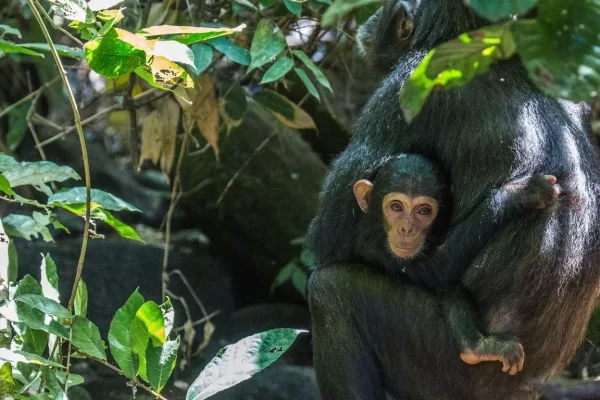
Week in Western Tanzania
A week in Western Tanzania offers an exclusive, remote safari combining chimpanzee trekking in Mahale Mountains National Park with Big 5 game viewing in Katavi National Park. Accessible via light aircraft from Arusha, this untouristy region is best visited from June to November, featuring breathtaking wilderness and luxurious, intimate camps.
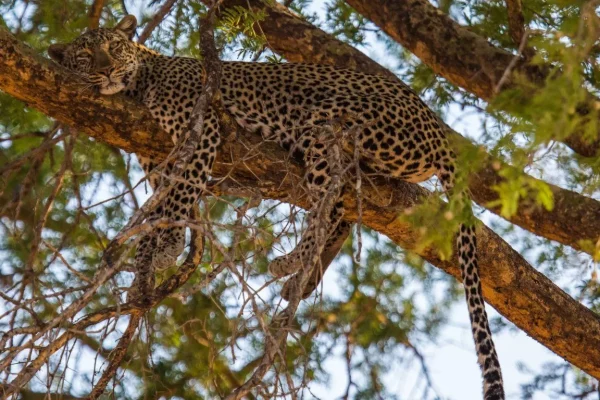
Serengeti And Mahale
Combining the Serengeti and Mahale offers the ultimate Tanzanian safari, pairing iconic big-game viewing and the Great Migration with intimate chimpanzee trekking in remote, lakeside forests. Typically, a 8 day trip involves flying between the vast savannahs and the western shores of Lake Tanganyika for a truly unique, diverse experience.
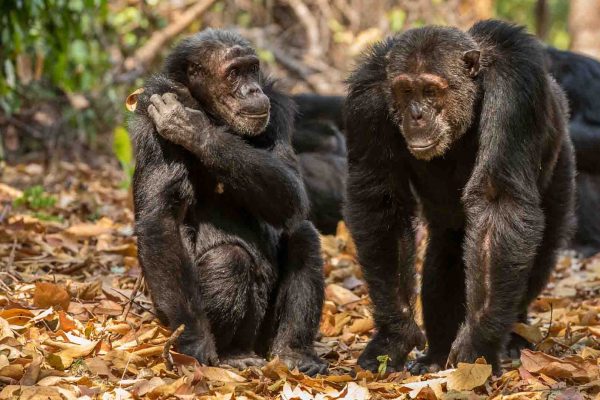
Chimpanzee Trekking Tanzania
Chimpanzee trekking in Tanzania offers a premier wildlife experience, primarily located in the remote western parks of Mahale Mountains and Gombe Stream on Lake Tanganyika. The best time to visit is the dry season from June to October, when chimps are easier to track. Visitors can spend one hour with habituated groups.
Things to Do in Mahale Mountains National Park
The majority of visitors to the Mahale Mountains travel there primarily to observe these apes. They keep an eye on the winding paths, carry youngsters on their backs as they swing across the hills, and communicate with one another via the branches. The place is very magnificent.
Here’s our guide to visiting the Mahale Mountains National Park in Tanzania
1. Tracking Chimpanzees in the Mahale Mountains
To observe chimpanzees in their natural habitat, the Mahale Mountains rank among the world’s top destinations. Gombe Stream National Park, made famous by primatologist Jane Goodall, is 175 km north of the park and is extremely close to this one. But the greatest concentration of eastern chimpanzees, a subspecies of the common chimpanzee, has been discovered in these very mountains. In addition to being one of the rarest locations on Earth, it is home to chimpanzees and lions.
The Mahale Mountains National Park offers an excellent opportunity to see wild animals, while no promise can be made. Sleeping high in the mountains, guides will set out early in the morning to try to acquire a general idea of where they will be sleeping that day. Either you’ll have to climb difficult slopes to reach higher portions of the forest, or you might spot a chimpanzee in the first ten minutes of your walk. In any case, the chimps will likely be audible before they are visible.
The Mahale Mountains Chimpanzeea has strict regulations about group sizes (no more than six people) and how long visitors may spend with the monkeys (no more than an hour each group), as well as the mandatory use of medical face masks. You must be in good health to go on these hikes since they can spread human diseases, some of which are deadly.
Over fifty years ago, researchers from Kyoto University began studying the Mahale chimpanzees. Since 1965, researchers have been closely observing chimpanzee groups in the park. They have documented numerous interesting findings, such as shifts in alpha rank, the primary predators of chimpanzees (spoiler: lions), and the chimpanzees’ cultural practices and medicinal herb usage.
There have been more than 400 publications in Japanese and over 300 scholarly articles published in English as a result of the initiative. The M-group of habituated chimpanzees, a community of sixty individuals that researchers are able to recognise by face and name, is the most likely to be on display at the university.
2. Climb Mount Nkungwe (2,462m)
Although chimpanzees are the main attraction of Mahale Mountains National Park’s trekking tours, there is one standout exception.
Even though the peak of Mount Nkungwe is typically obscured by fog, it serves as a dramatic background for expansive views of the Mahale Mountains. Near the summit of Nkungwe, most hikers spend two or three days camping in inaccessible areas. It’s not an easy stroll. Climbing Mt. Humo and Mt. Mhensabantu are prerequisites to reaching the peak of Nkungwe.
The reward is that you will come across numerous fascinating animals and their tracks as you travel. From its peak, one can survey the neighbouring mountain ranges’ forested ridges and beaches, as well as Lake Tanganyika itself.
3. Lake Tanganyika
Located on the eastern banks of Lake Tanganyika, an enormous draw in its own right, the Mahale Mountains are particularly noteworthy for this reason. Among the great lakes of Africa, this one ranks second in terms of volume of water, second in terms of age, and second in terms of depth, with Lake Baikal in Siberia topping the list for all three of these categories.
Divisions of Lake Tanganyika occur in Tanzania, the DRC, Burundi, and Zambia; the lake empties into the River Congo. The DRC possesses the second-largest portion of the lake(40%), after Tanzania (46%). It is on this lake that the DRC and Tanzania meet.
Because of its secluded location, this lake’s ecosystem is flourishing, much like that of the Mahale Mountains. Living things have been here for a very long time because Lake Tanganyika is one of just twenty lakes on Earth that is older than one million years. Here you can find indigenous species. Water cobras, terrapins, hippos, and Nile crocodiles all call this lake home. Particularly because of the crocodiles, snorkelling can only be done in certain areas. Additionally, there are around 80 non-cichlid fish species in the lake, with 60% of those being indigenous. There are 250 cichlid fish species as well.
4. Wildlife in Mahale Mountains National Park
In groups, there are roughly a thousand chimpanzees that live in the Mahale Mountains. One group, the Mimikire clan or the M-group, has been in close proximity to Japanese researchers for decades and is used to human presence. In fact, this 56-chimp group is so at ease with its family that they will approach you and give you the side-eye!
On hikes, chimps have also been seen running through the bush in search of prey and shouting and screaming to one another. Chimpanzees like fighting, foraging, and grooming each other when it is calm. They have also been observed fishing for termites using sticks. A group’s younger members playing together is really enjoyable to witness! We strongly advise bringing your camera and a good pair of binoculars so you can make the most of the hour or so you have with these incredible animals.
Contact a member of our staff if this experience interests you. We welcome your questions and are delighted to provide guidance on where to stay and when to travel.
Accommodation in Mahale Mountains National Park
The Greystoke Mahale camp is a popular starting point for chimpanzee tracking expeditions. Greystoke is derived from the fictitious character Tarzan, whose given name is John Clayton, Viscount Greystoke. Here you may find picturesque thatched cottages constructed from reclaimed shipwood, featuring open fronts. Additionally, there is a two-story bar that offers a breathtaking view of the lake. Although there is some solar power, there is no electricity here. Furthermore, there is absolutely no Wi-Fi.
There are a couple of other choices: the more expensive Kungwe Beach Lodge, which has tented bandas on a white sand beach, and the five more cheap units at the government-run Mango Tree Bandas.
The Mahale Mountains National Park, located in western Tanzania, are ideal for adventurers seeking a challenging safari. This is a once-in-a-lifetime opportunity to see wild chimpanzees in their natural habitat, in an area of pristine wilderness. For information about the two available campgrounds at Mahale Mountain National Park, check below.
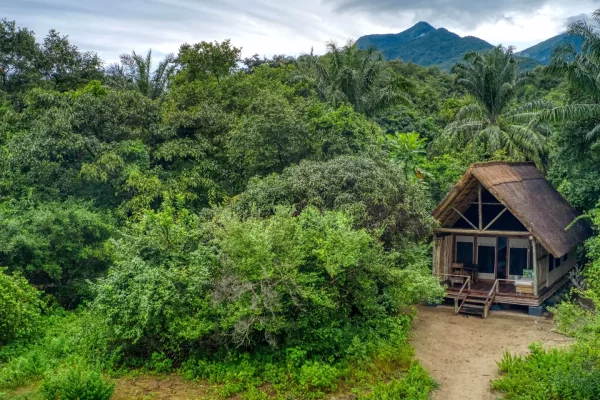
Mbali Mbali Mahale Lodge
The five magnificent hotels that make up Mbali Mbali are located in Tanzania. This itinerary will take you to some of Tanzania’s most remote and interesting national parks, each chosen for its own special experience and spanning vastly different natural zones.
Staying at Mbali Mbali Tarangire River Camp will provide you with an authentic safari experience under traditional canvas, presenting expansive views and enriching culture. Located 3.5 km from the main gate of the Tarangire National Park, Mbali Mbali Tarangire River Camp is set on a 25,000-hectare concession area and overlooks a branch of the Tarangire River.
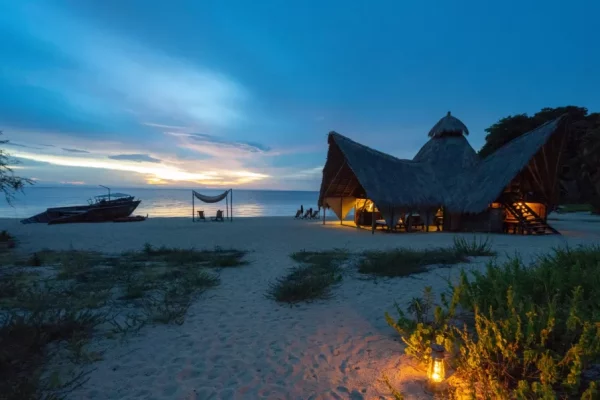
Greystoke Mahale
We are surrounded by chimpanzees at our renowned jungle-chic lodge, which is situated beside a gin-clear lake.
The wild chimpanzees of Mahale are the luckiest primates in the world, and you may join us on a legendary adventure to see them—along with the trackers, guides, and assistants who share their verdant paradise. We watch as chimpanzees run and play in the shaded forest floor. Greystoke Lodge, fashioned from old dhows, extends its hairy arms along the shore of the lake, providing our daring guests with an extra degree of comfort. Some inspirational experiences from our award-winning camp.
Location of Mahale Mountains National Park
A staggeringly magnificent region of the earth, Mahale Mountains National Park contains 1,600 square kilometers of mountains covered in jungle and rising to peaks as high as 2,400 meters! On the lower slopes, the forest is composed of nutmeg, mahogany, silk, fig, and evergreen vines, while the upper slopes are covered in brittlewood, rushfoil, pines, and bamboo wilderness. Along with the chimps, other animals in the area include antelopes, blue duiker, yellow baboons, porcupines, squirrels, two species of mongooses, and the colorful black-and-white colobus monkey. There are an incredible number of birds and vibrant butterflies as well.
Lake Tanganyika, the second-deepest lake in the world, is also a part of the park. There are about 250 different fish species in this. A joy to behold are the stunning white-sand beach and the turquoise waves. The chimps frequently approach the lakeside and even get into some nearby campers during the dry season. Consider traveling here between August and October if you would prefer your safari to include a 30-minute stroll through the rainforest rather than a 3-hour excursion. Of course, viewing the chimps is always enjoyable regardless of the season!
How to get to the Mahale Mountains National Park?
How to Get to Mahale Mountains National Park: A Detailed Guide. Mahale is not the easiest or cheapest destination to travel to. Depending on your schedule, your entry point to the country will be either Kilimanjaro International Airport (JRO) in Arusha town, or Julius Nyerere International Airport (DAR) in Dar es Salaam. In most circumstances, your tour operator will pick you up from the airport and make ongoing arrangements.
The best method to reach to Katavi is through a flight from Arusha. The only public, scheduled flight is the twice-weekly service between Ruaha, Katavi and Mahale provided by Safari Air Link.
Zantasair partners with its sister company Mbali Mbali lodges, to offer twice-weekly shared charter flights between northern Tanzania and western Tanzania, incorporating Katavi and Mahale National Parks.
Best time to visit Mahale Mountains National Park
This is a great place to visit any time of year, but if you want to avoid the rain, then March, April, and early May are the months to skip. Good exploring conditions are available from mid- to late-May through December, with the winter months (June–September) being the driest and, hence, the ideal time to go hiking. You can also see chimpanzees feeding near the lodges in the summer months of June and July.
Is it safe?
The routes of the Mahale Mountains are often safe for hiking, trekking, and kayaking, while there are risks involved in any outdoor activity. Not many people bother to visit this park because of its isolated location. The presence of crocodiles makes swimming and snorkelling risky activities. Having a guide who can point you in the correct direction is crucial, and you should also make sure you get any necessary vaccines before you leave.
Inspired? Check out our wildlife watching holidays, including gorilla trekking on our Ultimate Adventure Through Rwanda.