
Chimpanzee Civil War 2026 | Uganda’s Kibale National Park
Chimpanzees in Uganda locked in vicious ‘civil war’, say researchers
Researchers have found evidence of a violent “civil war” that has been going on for the past eight years among the world’s largest known population of wild chimpanzees.
Researchers in Uganda’s Kibale National Park have documented 24 homicides, including 17 newborns, within the once-close-knit Ngogo chimpanzee population. The specific reason behind this outbreak remains unclear.One of the authors, Aaron Sandel, made the statement that these apes would actually hold hands. “Now they’re trying to kill each other.”
The length and severity of the violence may provide light on the origins of early human conflict, according to the study published in the scientific magazine Science.
Uganda Chimpanzee Civil War | Ngogo Chimpanzee War
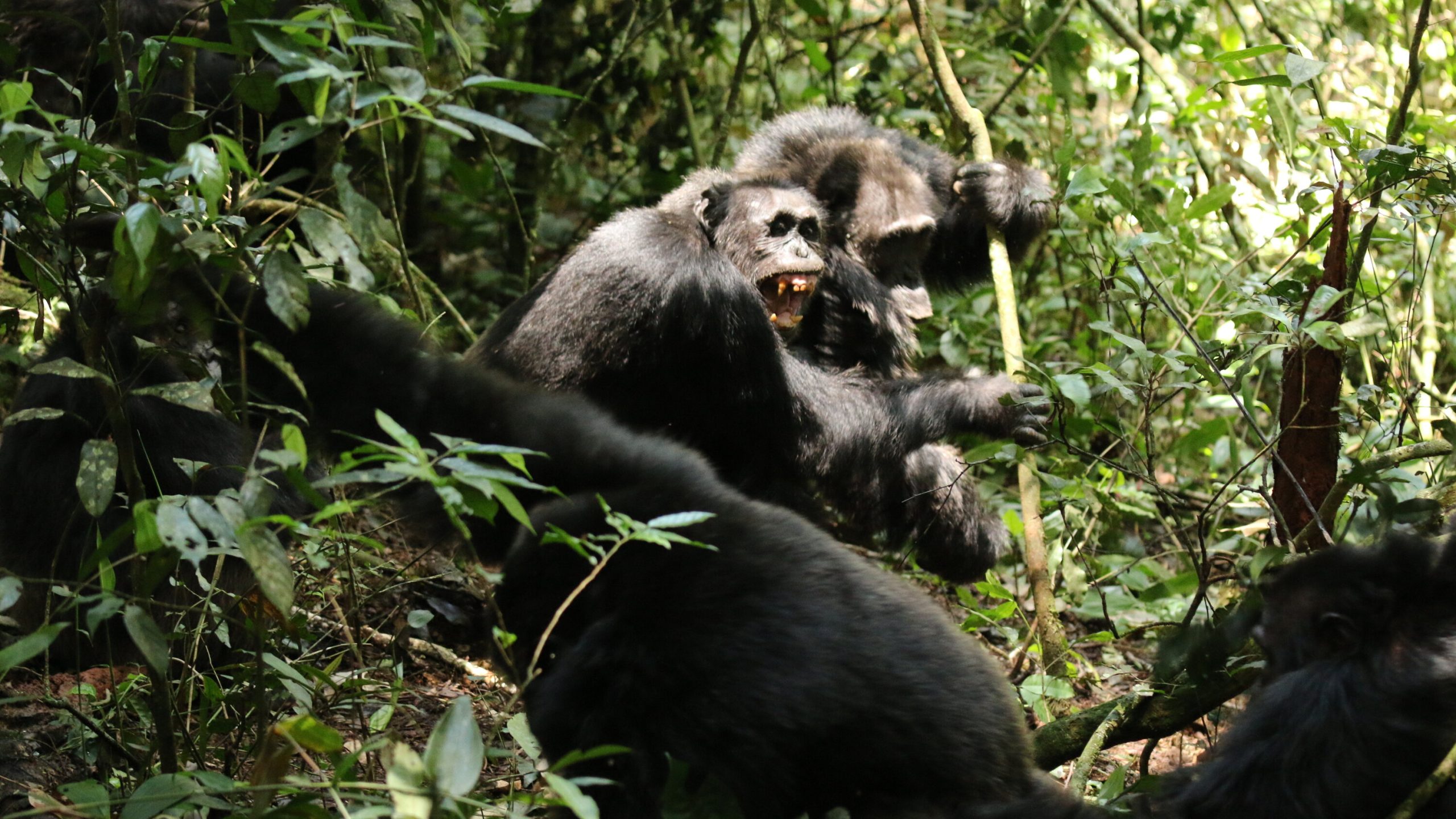
According to Sandel, a chimpanzee is “extremely possessive” and engages in “hostile interactions with individuals from other groups,” according to the co-director of the Ngogo Chimpanzee Project and an anthropologist from the University of Texas in the US.”It’s similar to being afraid of unknown people,” he explained on the Science podcast.
However, according to Sandel, the about 200 Ngogo chimpanzees have coexisted peacefully for many decades.
Although academics classified them as either Western or Central, the two groups really functioned as one.
When the Western chimpanzees fled and were pursued by the Central group in June 2015, Sandel reported that he first noted their polarisation.”Chimpanzees are sort of melodramatic,” he explained, going on to say that after fights, the animals would typically engage in “screaming and chasing” before eventually grooming and cooperating.
The researchers noticed a six-week avoidance period and a gradual decline in interaction frequency between the two sets after the 2015 dispute.
Says Sandel, “a little more intense, a little more aggressive” when they did happen.
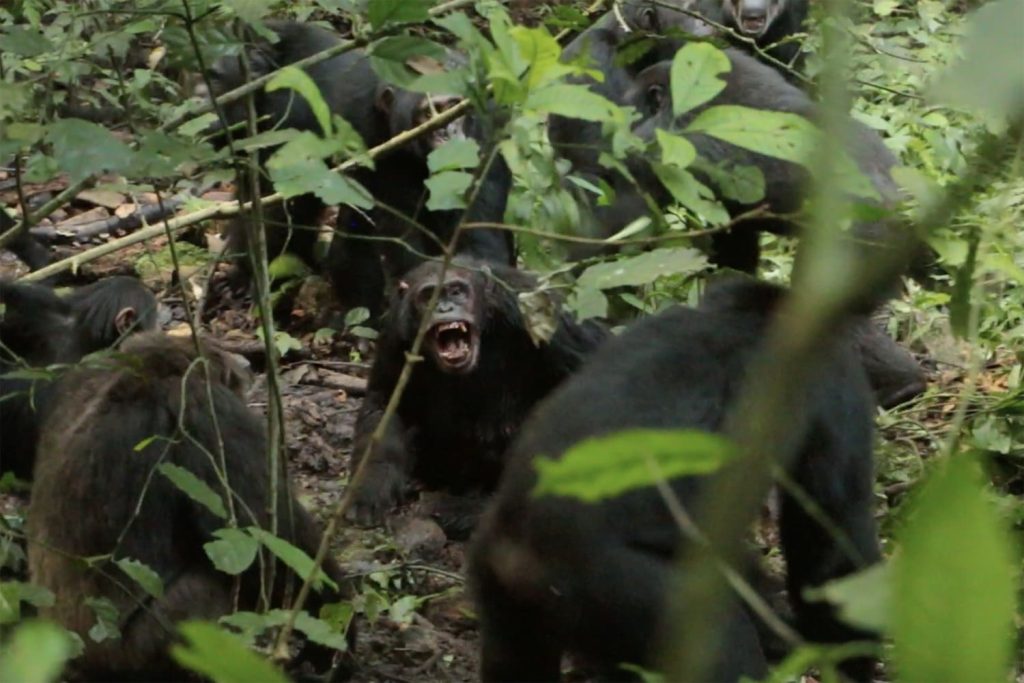
Members of the Western group began assaulting the Central chimpanzees when the two groups emerged in 2018.
Although the researchers think the real death toll is higher, the study did find that at least seven adult males and seventeen infants from the Central chimpanzees had been killed in 24 targeted attacks since the separation.
A number of variables, including population density and the resulting struggle for resources, as well as “male-male competition” in the reproductive process, could be at play here, according to the researchers.
But they say there were three likely catalysts:
- The first was the 2014 death toll of five adults (one male and one female), the cause of which is still a mystery; this tragedy may have severed social connections within and between subgroups.
- According to the research, the first time the Western and Central groups started to drift apart occurred the same year that the alpha male changed. “Changes in the dominance hierarchy can increase aggression and avoidance in chimpanzees,” said
- The third component was the 2017 respiratory pandemic that claimed the lives of 25 chimpanzees, 4 adult males and 10 adult females, the year preceding the final separation. One of the men who passed away was “among the last individuals to connect the groups,” according to the study.
Researchers Sandel and colleagues hoped their results would make people reevaluate their understanding of war and human strife.The authors of the article stated that during the Ngogo fission, members of the same group who had spent years sharing housing, food, personal hygiene products, and security measures were suddenly viciously attacked because of their newfound affiliation with the group.
They went on to say that “relational dynamics may play a larger causal role in human conflict than often assumed” if chimpanzees, who are genetically closest to humans, could accomplish so without the influence of human-made categories like religion, ethnicity, and politics.
A researcher from Germany’s German Primate Center, James Brooks, called it a “reminder of the danger that group divisions can present to human societies.”.
In Science, he said: “Humans must learn from studying the group-based behaviour of other species, both in war and at peace, while remembering that their evolutionary past does not determine their future.”