
Big Five Tanzania Safaris | When & Where to See Big Five Animals
The “Big Five” refers to the lion, African leopard, African elephant, Cape buffalo, and rhinoceros. Originally coined by big-game hunters to describe the five most dangerous and difficult animals to hunt on foot, the term now defines the ultimate bucket-list safari sightings.
As symbols of Africa’s wildness, the Big Five—lion, leopard, elephant, rhino, and buffalo—are hard to miss. From the Serengeti to the Ngorongoro Crater and other northern big parks, Tanzania offers the finest chance to view them all. During a private safari with one of our knowledgeable local guides, you will learn the ideal times and places to see these creatures.
7-Day Tanzania Big Five Safari
Seeing Africa’s “Big Five” (lion, leopard, elephant, Cape buffalo, and black rhino) in Tanzania is a bucket-list wildlife experience. The premier destination for this is the Ngorongoro Crater, where all five species roam within a single collapsed caldera, alongside the Serengeti National Park.
Spotting the Big Five in Tanzania
Many people surely rank that highly. In Tanzania, your chances of accomplishing this are highest. You have the best chance of seeing the Big Five in Tanzania due to the country’s biggest number of wild animals compared to any other African country. Tanzania’s status as the top destination for wildlife viewing is certainly not coincidental. Here on the blog, we’ll explain the Big Five’s origins and how to identify them.
Did you know that Tanzania is home to Africa’s biggest lion and elephant populations, making it one of the most popular safari destinations in the world?
What is the Big Five?
The Big Five are not so named because of their relative sizes. In the late nineteenth and early twentieth centuries, Africans used this term to describe the most elusive and dangerous game animals. Those were the days when it was socially acceptable to hunt these magnificent creatures. The Big Five are now the only subjects of wildlife photography, allowing these majestic creatures a return to their natural habitat.
Hunters in South Africa formally coined the name, but safari tourists gave it a good connotation. These days, the Big Five represent eco-consciousness and the value of diverse ecosystems.
Which Animals are in the Big Five and where Can You Find Them?
Lions, leopards, elephants, rhinoceroses, and buffalo make up what is known as the Big Five. These creatures exemplify the resilience, swiftness, and power of the African environment.
1. The Lion
The animal in question is among the most remarkable of its kind. He is the lord of the African grasslands. The lion, a massive mammal, occupies the very pinnacle of Africa’s food web. Lion prides often consist of one male and several females due to the animals’ sociability. Much of Africa and a tiny portion of India are still home to lions.
The Serengeti National Park and the Ngorongoro Conservation Area are home to an estimated 15,000 lions in Tanzania.
“In the early morning hours, on our Serengeti safaris, we frequently come across lion prides slumbering beneath acacia trees.”
2. The Leopard
Another predatory member of the feline family is the leopard—not to be mistaken with the cheetah. Two of the most elusive wild animals are the cheetah and the rhino. Reason being, they frequently spend whole days ensconced in trees. In order to start hunting, the leopard would typically emerge from its tree perch around dusk. The leopard is a native animal of both Asia and Africa.
It is likely that leopards may also be spotted in the Crater in addition to the Serengeti, Tarangire, and Selous. At dusk, they come alive as solitary creatures. Between five thousand and seven thousand specimens are still in Tanzania.
3. The Elephant
Of all land animals, the elephant is by far the largest. Their tall trunk, enormous ears, and powerful tusks make them easily identifiable. Elephants are sociable creatures that thrive in large groups. In most herds, the eldest cow takes charge. The southeast Asian and most of the African continents are home to elephants.
Tarangire National Park, Serengeti, Lake Manyara, and Selous Game Reserve are home to substantial populations of the over sixty thousand African elephants who call Tanzania home.
“The breathtaking sight of tantangire is its herds of up to 200 elephants all at once.”
4. The Rhino
Among the Big Five, the rhino is the most endangered species right now. The rhino population has never been lower, and this is the reason behind it. The horn is thought to have therapeutic properties, hence these magnificent creatures are hunted extensively. Few areas in southern Africa still have rhino populations.
The number of black and white rhinos in Tanzania has dropped to a few dozen. Their populations are gradually growing because to preservation measures in many areas, including the Ngorongoro Crater, northern Serengeti, and Mkomazi National Park.
5. The Buffalo
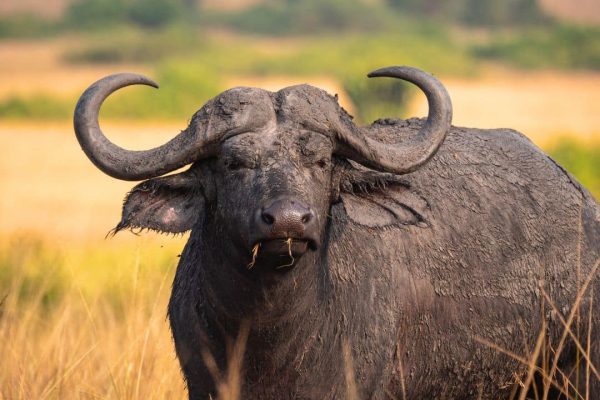
One of the Big Five that is easiest to recognise is the buffalo. This is due to the fact that their abundance across the expansive African plains is a major factor. Just because they happen so often doesn’t mean they’re boring. It is very remarkable to witness a herd of a thousand buffaloes fording a river. Savannas in Africa are the most common habitats for buffalo.
Almost all of Tanzania’s national parks, including Selous and Lake Manyara, are home to buffaloes. Guides frequently refer to these creatures as “the unpredictable force of Africa” because of the large herds in which they live.
Where in Tanzania Can You See all of the Big Five?
In Tanzania, you can see the Big Five in various locations. Below are the best places to spot each animal:
Lion & Leopard:
- Serengeti National Park
- Tarangire National Park
- Lake Manyara
- Ngorongoro National Park
Elephants & Buffaloes:
- All national parks in Tanzania
Rhinos:
- Serengeti National Park
- Ngorongoro National Park (greatest opportunity).
When to go: any time of year is good for seeing wildlife. We plan your vacation around the times of year when the majority of species, including the Big Five, are most likely to be in their natural habitats. The only time it can be slightly more challenging is during the rainy season (March to May), when animals are more likely to seek refuge from the rain.