
Big Five Kenya Safaris | When & Where to See the Big 5 Animals
The “Big Five” refers to five iconic African animals: the lion, leopard, elephant, rhinoceros, and Cape buffalo. Originally coined by trophy hunters to describe the most dangerous animals to track on foot, the term now highlights the most coveted wildlife sightings for safari-goers across Kenya.
A Kenya “Big Five” safari offers the ultimate opportunity to spot the lion, leopard, elephant, rhinoceros, and Cape buffalo in their natural habitats. The best way to track all five is by combining the nutrient-rich plains of the Masai Mara National Reserve with rhino sanctuaries like Ol Pejeta Conservancy.
Kenya Big Five And Rhinos
Kenya is home to the coveted “Big Five” (lion, leopard, African buffalo, elephant, and rhinoceros). The country hosts roughly 2,000 rhinos, successfully protecting nearly 78% of the world’s critically endangered Eastern black rhino population. Finding rhinos requires visiting specific, highly protected sanctuaries across the country.
Big Five Kenya Safaris
For many, a trip to the African savannah isn’t complete without seeing the Big Five, the most iconic creatures of any safari. We’re referring to the legendary beasts that can be seen on the top East African safaris: the lion, leopard, African buffalo, elephant, and rhinoceros.
In the days of colonial game hunters, the name “Big Five” referred to the five majestic beasts that were so difficult to track down and kill on foot. Thankfully, our species has mostly given up on legally destroying these natural wonders and is instead working to keep them safe for future generations. In Kenya’s vast wildlife national parks, you may go on an endless safari and witness the big five—sometimes even getting up close and personal with these iconic species.
The Big Five Animals in Kenya
1. Lions
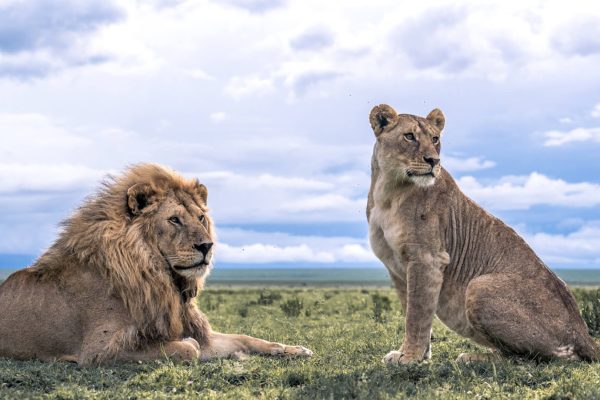
Seeing the “king of the jungle” is an expected part of any safari. Several parks in Kenya are home to prides of lions, which is a blessing. Tsavo lions, so called because they are a rare subspecies of lion with exceptionally short manes, call the Tsavo Parks their home.
Northern Samburu Park and Amboseli Park, both on the border with Tanzania, provide safari-goers the opportunities to witness the terrifying cats.
However, the Masai Mara is a must-visit for any lion enthusiast due to the abundance of prides and, by extension, individual lions. During the Great Migration season (July–October), the park and its neighbouring conservancies provide the finest opportunity to observe these majestic carnivores in action.
2. Leopards
The enigmatic and slender leopard stalks prey between the hours of darkness and light. Grazers like antelope, gazelle, zebra, and wildebeest are the typical food for this elegant predator, which often perches high on a tree branch and sweeps the horizon for them.
Leopards can be spotted in larger parks like Tsavo and Masai Mara as well as in smaller reserves like Ol Pejeta Conservancy and Nakuru National Park. Ol Pejeta offers night safaris, which greatly improve your chances of seeing wildlife.
3. Elephants
The majestic elephant, one of the most popular animals in Africa and one of the “Big Five,” can be seen in most of Kenya’s animal parks. Often seen in large herds, the majestic pachyderms will be making their way to and from their favourite watering spots. The herbivore elephant is frequently seen gnawing on large branches of leaves.
Nearly a thousand of these magnificent animals call Samburu Park home. But you will definitely encounter elephants… and likely more than once during your vacation to Amboseli, a smaller park with such a big density of them.
4. Buffalos
Of the “Big Five” animals, this ferocious beast is the sole one that is not in danger of extinction. Its reputation as a vicious predator stems from the fact that it would charge at its prey at the slightest provocation, particularly if it was injured.
Almost every wildlife park in Kenya is home to this unique and occasionally irritable horned bovid.
5. Rhinos
Witnessing a giant rhino in action is an unforgettable experience, because to its massive stature and distinctive horns that protrude from its nose bridge. Rhinos are surprisingly timid for such a large and intimidating animal, making them difficult to spot in their natural habitat.
There are designated areas where rhinos can be safe from poachers and their numbers can be replenished because they are the most threatened of the five “Big Five” animals.
Most wildlife parks include rhinos, but the ones that house them—Nairobi National Park, Ol Pejeta, and Lake Nakuru—are the best places to see them.
Your safari will be highlighted by these five distinct species, each with its own tale, and you will be inspired to safeguard them so that future generations can appreciate them as much as we do.