
Mount Kenya National Park Trekking Tours & Travel Guide
Mount Kenya, a UNESCO World Heritage Site and Africa’s second-highest peak (5,199m), offers a challenging and scenically diverse alternative to Kilimanjaro. The main trekking summit Point Lenana (4,985m), is accessible to fit hikers, while the higher twin peaks of Batian and Nelion require technical climbing skills. The mountain is known for its dramatic scenery, featuring jagged, snow-capped peaks, alpine lakes, and forests of giant lobelia and groundsel.
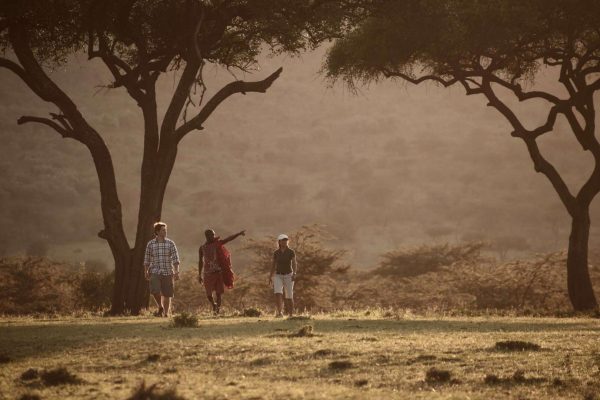
Mount Kenya-Samburu-Masai Mara
Mount Kenya, Samburu, and Masai Mara are three unique and renowned sites in Kenya, each providing distinct wildlife and scenery experiences. Mount Kenya, a UNESCO World Heritage site, ranks as Africa’s second-highest mountain, renowned for its arduous ascents and breathtaking vistas. Samburu National Reserve, situated in northern Kenya, is renowned for its distinctive “Samburu Special Five” (reticulated giraffe, gerenuk, Grevy’s zebra, Somali ostrich, and beisa oryx) as well as the vibrant culture of the Samburu people.
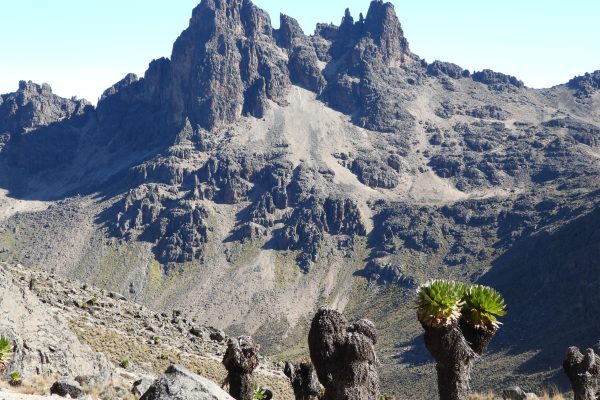
Mount Kenya vs Kilimanjaro
Mount Kilimanjaro (5,895m) is Africa’s highest, non-technical “trekking peak” known for its sheer altitude and iconic status. Mount Kenya (5,199m) is the second-highest, offering a more scenic, rugged, less crowded, and technical climb. Kilimanjaro focuses on altitude management over 7-8 days, while Kenya offers better scenery, wildlife, and faster ascents.
Where is Mount Kenya?
Mount Kenya and the surrounding National Park lies on the equator in the central region of Kenya.
When Was Mount Kenya First Climbed?
After three unsuccessful efforts the same year, Sir Halford John Mackinder, Cesar Ollier, and Josef Brocherel finally reached the peak of Batian on Mount Kenya on September 13, 1899. Desertion of porters, starvation, thievery, and even murder were among the many difficulties the crew had to overcome prior to their successful journey.
How High Is Mount Kenya?
Mount Kenya is home to two technically challenging peaks: Batian, at 5199 meters, and Nelion, at 5188 meters, the second-highest summit. As the second-highest trekking peak in Africa, Point Lenana stands at 4985 meters, making it the third-highest peak overall.
Can You Trek To The Summit Of Mount Kenya?
Point Lenana, at 4,985 meters, is a challenging but doable trekking peak for most people. Climbing it by the Naro Moru route makes it the highest via ferrata in the world, which is an exciting and thrilling experience. The ideal African trekking experience is a climb of this mountain, which offers panoramic views of the surrounding savannah, broad valleys, gorges, and volcanic peaks.
Numerous routes lead up Mount Kenya, including more technical ascents of Nelion and Batian, the mountain’s two highest peaks. Because it offers the finest opportunity to observe animals and because the summit ridge up to Point Lenana from the Austrian Hut is just breathtaking, our most popular option is a Naro Moru ascent and Chogoria descent on the Mount Kenya traverse. It is also a wonderful start to mountaineering. The descent’s breathtaking views of the gorge, lakes, lower peaks, and enormous forest are another highlight.
A Mount Kenya walk up and down the western side, via the Naro Moru and Sirimon routes, is the most economical method to reach the peak. The Sirimon ascent is the preferable choice if you’re seeking an easier path to the summit. The final camp at Shiptons is located significantly closer to the peak and the terrain is considerably softer compared to the Naro Moru route.